Are your cookies burning before the timer goes off, or does dinner take much longer to cook than the recipe suggests? If your oven temperature is not accurate, there may be more going on than a simple difference in cooking time.
Ovens naturally cycle their heating components on and off to maintain an average temperature. This means the temperature inside the oven can rise above and fall below the selected setting during normal operation. Consistently overcooked or undercooked food, unusually long preheating, or significant temperature differences, however, may point to a problem.
From calibration issues to failed heating components, several problems can affect how well an oven maintains the temperature you select.
Oven Temperature Is Not Accurate? 6 Common Causes
An inaccurate oven temperature does not always mean the appliance has a major mechanical problem. Sometimes cookware, oven loading, or calibration is responsible. In other cases, a temperature sensor, heating component, gas igniter, or electronic control may need professional attention.
Here are six common causes of inaccurate oven temperatures and the symptoms that can help you recognize them.
1. Cookware or Oven Loading Is Affecting Cooking Results
Before assuming the oven itself is malfunctioning, consider how food is being cooked.
Crowding the oven can restrict airflow and affect how heat circulates around food. Rack position and the type of cookware you use can also influence cooking and browning.
You may notice:
- Food browning faster on one side
- Different results depending on rack position
- Longer cooking times when the oven is crowded
- Recipes cooking differently when using different pans
Follow the rack-position and cookware recommendations in your oven’s use and care guide. Avoid overcrowding the oven when consistent airflow is important.
If inconsistent temperatures continue across different recipes, cookware, and rack positions, the issue may be related to the oven’s temperature calibration.
2. The Oven May Need Temperature Calibration
It is normal for an oven’s internal temperature to fluctuate while cooking. The appliance cycles its heat source on and off to maintain an average temperature near the setting you selected.
Because of this cycling, a single temperature reading above or below the selected temperature does not necessarily mean something is wrong.
Calibration may be worth considering when:
- Food consistently cooks faster than expected
- Food regularly needs extra cooking time
- The oven consistently runs somewhat hotter or cooler than the selected temperature
- Cooking results are otherwise predictable
Temperature calibration varies by oven model. If your oven consistently seems too hot or too cool, schedule professional service to determine whether calibration is appropriate or another component is causing the temperature problem.
If the temperature difference is significant, unpredictable, or continues to change, the oven temperature sensor may be responsible.
3. The Oven Temperature Sensor Is Malfunctioning
The temperature sensor monitors heat inside the oven cavity and provides information the control system uses to regulate heating.
If the sensor is faulty, the oven may receive inaccurate temperature information. This can cause the appliance to heat too much, too little, or inconsistently.
Possible signs include:
- Food regularly overcooks or undercooks
- The oven struggles to maintain temperature
- Temperature swings seem excessive
- Cooking results vary even with similar foods and settings
Temperature sensor diagnosis can involve electrical testing and access to internal components. If inaccurate temperatures continue despite normal oven use and appropriate calibration, a technician should determine whether the sensor or another part of the heating system is responsible.
If the sensor is providing accurate information but the oven still struggles to produce enough heat, the heating components may be the next area of concern.
4. A Bake or Broil Element Is Failing
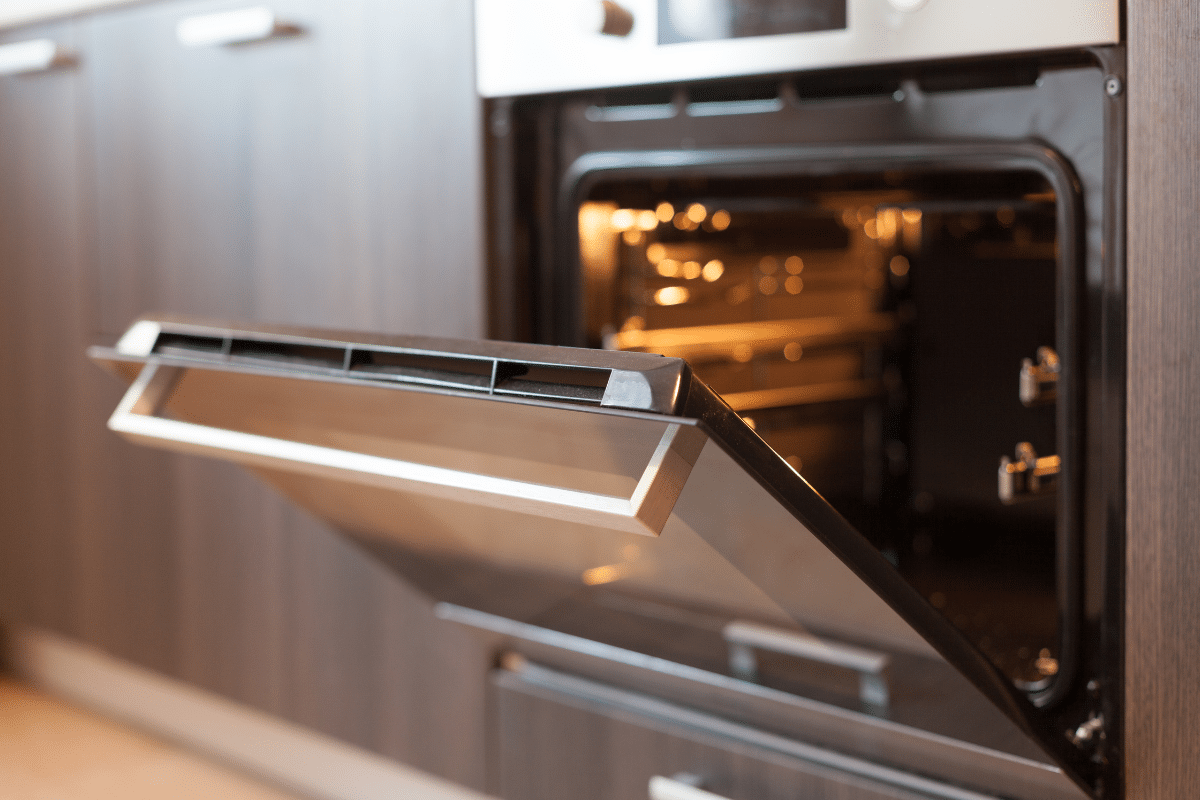
Electric ovens typically rely on bake and broil elements to produce heat. Depending on the model and cooking mode, these elements may work at different stages to preheat the oven and maintain the selected temperature.
A failing heating element can prevent the oven from heating normally or maintaining consistent temperatures.
Common symptoms may include:
- Slow preheating
- An oven that does not reach the selected temperature
- Food taking longer than expected to cook
- Uneven cooking or browning
- Visible damage to an exposed heating element
If an exposed element has obvious blistering, cracking, or other visible damage, avoid touching or attempting to replace it. Element failures and related electrical problems should be diagnosed professionally.
Our oven repair specialists can determine whether a heating element or another electrical component is preventing the oven from maintaining the correct temperature.
While electric ovens rely on heating elements, gas ovens can develop similar temperature problems when the ignition system begins to fail.
5. The Gas Oven Igniter Is Weak or Failing
In many gas ovens, the igniter must reach the proper operating condition before the gas valve can open and the burner can ignite. If the igniter becomes weak or begins to fail, the burner may ignite slowly, intermittently, or not at all.
This can prevent the oven from heating as expected and may lead to longer preheating times, extended cooking times, or inconsistent oven temperatures.
Signs of a possible igniter problem include:
- Slow or inconsistent preheating
- Longer-than-normal cooking times
- Intermittent heating
- An oven that struggles to reach the selected temperature
- An oven that sometimes fails to heat
A weak igniter may still glow while failing to operate correctly, so appearance alone does not confirm whether the component is working properly.
Do not attempt to test the igniter, gas valve, gas line, or other internal gas-related components. A qualified technician should diagnose suspected gas oven ignition problems and determine which component needs attention.
If the oven’s heating components and ignition system are functioning normally, inaccurate temperatures may originate with the electronic controls.
6. The Oven Control Board Is Malfunctioning
The oven control board helps regulate heating based on information received from components such as the temperature sensor. Depending on the oven design, it controls power to components involved in the heating process.
If the control board malfunctions, the oven may stop heating too soon, heat for too long, or behave inconsistently. Any of these problems can affect cooking temperatures.
Signs that may point toward a control problem include:
- The oven heats far above or below the selected temperature
- Heating is inconsistent
- The oven stops heating unexpectedly
- Controls behave unpredictably
- Display or button problems occur along with heating issues
If you’re also experiencing problems with buttons, displays, or electronic controls, our guide to an oven control panel not working covers additional symptoms that may indicate a control-related problem.
Control board problems can resemble failures elsewhere in the oven. Because several components can produce similar symptoms, professional diagnosis is important before determining which part actually needs repair.
When inaccurate temperatures continue despite normal cooking practices and calibration considerations, it may be time to have the appliance professionally evaluated.
When to Schedule Professional Oven Service
An occasional difference in cooking time does not necessarily indicate an oven failure. Recipes, cookware, rack position, and normal heating cycles can all affect results.
However, repeated temperature problems are worth investigating, especially when they begin affecting multiple meals and cooking methods.
Consider scheduling professional oven service if:
- Food consistently burns or remains undercooked
- The oven takes noticeably longer than usual to preheat
- The oven struggles to reach the selected temperature
- Temperature differences are large or unpredictable
- Cooking results remain inconsistent across multiple uses
- A heating element shows visible damage
- A gas oven heats intermittently or sometimes fails to heat
- Display or control problems occur along with temperature issues
- Calibration does not correct a consistent temperature difference
Problems involving temperature sensors, heating elements, gas igniters, electronic controls, and internal wiring require accurate diagnosis. Avoid opening panels, performing electrical testing, or inspecting gas-related components yourself.
If your oven temperature is not accurate and the problem consistently affects cooking results, our professional oven repair technicians can restore consistent, reliable oven performance.